Wrenches, Neighbors, and a New Economy: How Repair Collectives Are Reshaping American Communities
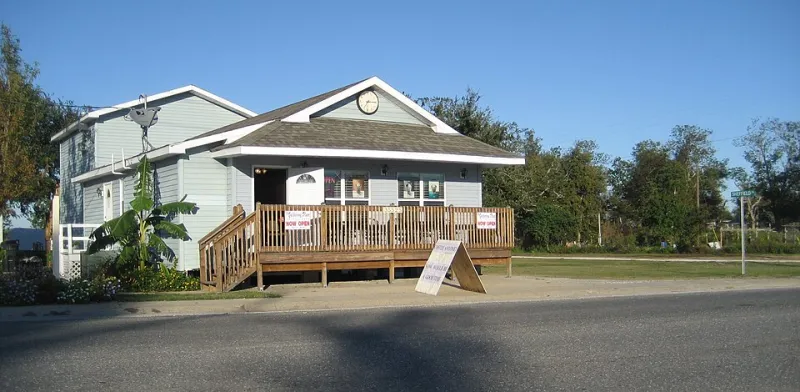
Photo: Infrogmation of New Orleans, CC BY-SA 3.0, via Wikimedia Commons
Every year, Americans discard an estimated 9.4 million tons of electronics alone — a figure that does not account for the mountains of broken furniture, fraying textiles, and malfunctioning small appliances that quietly fill landfills from Maine to California. Behind each discarded item lies a decision that, for most people, feels inevitable: it is simply easier, and often cheaper in the short term, to replace than to repair. That logic, however, is neither natural nor accidental. It is the product of decades of deliberate industrial design — a strategy known as planned obsolescence — engineered to keep consumers purchasing and corporations profitable.
A growing coalition of Americans has decided to refuse that bargain. Through repair cafes, community tool libraries, and neighborhood fix-it cooperatives, they are building an alternative infrastructure — one rooted in shared knowledge, mutual aid, and collective ownership of skills that previous generations took for granted.
What Is a Repair Cooperative, and Why Does It Matter?
At its most fundamental level, a repair cooperative is a community-organized space where people bring broken items and, with the guidance of skilled volunteers or trained members, learn to fix them. Unlike a traditional repair shop, the emphasis is rarely on professional service delivery. The goal is empowerment: participants leave not only with a functioning toaster or a mended jacket but with the confidence and competence to address similar problems in the future.
The Repair Cafe Foundation, originally founded in the Netherlands in 2009, has catalyzed the establishment of more than 3,000 locations globally, with hundreds now operating across the United States. Cities including Portland, Oregon; Austin, Texas; Chicago, Illinois; and Philadelphia, Pennsylvania have embraced the model enthusiastically, often integrating repair events into existing community center programming or public library systems.
Tool libraries represent a complementary dimension of this movement. Rather than every household purchasing a drill that will be used for a cumulative total of thirteen minutes over its lifetime — a statistic frequently cited by sustainable consumption researchers — tool libraries allow entire neighborhoods to share a single high-quality set of equipment. The West Seattle Tool Library and the Tempe Tool Library in Arizona exemplify how this model can be scaled effectively, offering members access to hundreds of tools for a modest annual membership fee.
The Economics of Repair: Saving Money and Redirecting Value
The financial case for repair cooperatives is compelling, particularly for working- and middle-class Americans navigating rising consumer prices. A replacement blender may cost $45 at a big-box retailer. A professional repair, if one can even be found, may cost nearly as much. But attending a community repair cafe — typically free or donation-based — transforms that economic calculus entirely.
The Fixers Collective in New York City has documented hundreds of successful repair events since its founding, with participants reporting average savings of $50 to $200 per item repaired. Multiply those figures across a community of regular participants, and the aggregate economic benefit becomes substantial. More importantly, that value remains within the community rather than flowing to distant shareholders.
Beyond individual savings, repair cooperatives generate what economists call "social capital" — the networks of trust, reciprocity, and shared norms that make communities more cohesive and resilient. When a retired electrician volunteers her Saturday morning to help a college student fix a laptop, or when a neighborhood seamstress teaches a teenager to replace a broken zipper, something more than a transaction occurs. A relationship forms. Knowledge transfers. Community deepens.
Case Study: The Repair Revolution in Asheville, North Carolina
Asheville, long recognized for its progressive community culture and commitment to local economies, offers a particularly instructive example of how repair cooperatives can integrate into a broader ecosystem of cooperative values. The Asheville Tool Library, operating as a nonprofit cooperative, provides members with access to more than 1,500 tools and regularly hosts skill-share workshops on basic home repair, bicycle maintenance, and electronics troubleshooting.
What distinguishes Asheville's approach is its intentional connection to adjacent cooperative institutions. Members of the tool library are frequently also participants in the local food cooperative, community land trust, and worker-owned businesses in the area. This network effect demonstrates a core principle of cooperative economics: collective institutions reinforce one another, creating communities that are meaningfully less dependent on extractive corporate systems.
Confronting Planned Obsolescence at the Policy Level
Repair cooperatives are not operating in isolation from the broader political economy. The Right to Repair movement — which advocates for legislation requiring manufacturers to provide consumers and independent repair professionals with the tools, parts, and documentation necessary to fix their products — has gained significant momentum in recent years. Colorado became the first state to pass a digital right-to-repair law in 2023, and numerous other states are actively considering similar legislation.
Repair cooperatives serve as both practical preparation for and political argument in favor of such policies. When a community organization can demonstrate that hundreds of residents have successfully repaired devices that manufacturers claimed were irreparable, it challenges the narrative that disposal is the only option. These collectives are, in effect, producing evidence that a different relationship between people and their possessions is not only possible but preferable.
How to Start a Repair Collective in Your Community
For readers inspired to bring this model to their own neighborhoods, the barriers to entry are lower than one might expect. The following steps provide a practical foundation:
Identify your anchor space. Public libraries, community centers, houses of worship, and makerspace organizations are natural partners. Many already host community events and have existing infrastructure for organizing volunteers.
Recruit skilled volunteers broadly. Repair knowledge exists in abundance in most communities — among retired tradespeople, hobbyists, immigrants who grew up in cultures with stronger repair traditions, and self-taught enthusiasts. A simple flyer or social media post can surface remarkable talent.
Start with a single event. Rather than attempting to launch a permanent facility immediately, host a one-day repair cafe. Gauge community interest, identify gaps in volunteer expertise, and build relationships before committing to a recurring model.
Connect with existing networks. Organizations such as the Repair Cafe Foundation, iFixit, and the US Right to Repair Coalition offer resources, community forums, and guidance for new organizers.
Embrace the educational dimension. The most enduring repair collectives prioritize teaching over doing. When participants learn alongside volunteers rather than simply receiving a repaired item, the community's collective capacity grows with every event.
A Movement Built on Collective Belief
The rise of repair cooperatives in the United States is, at its core, an expression of a fundamental cooperative conviction: that people working together, sharing knowledge and resources, can meet their needs more effectively, more equitably, and more sustainably than any market transaction can offer.
Throwaway culture did not emerge inevitably from human nature. It was constructed — by corporate strategy, by public policy failures, and by the gradual erosion of the repair skills and community institutions that once made self-sufficiency ordinary. Rebuilding those institutions, one repair cafe and one tool library at a time, is the kind of patient, practical, community-centered work that defines genuine collective advancement.
The wrench, it turns out, can be a revolutionary tool.