Splitting the Cart: How Neighborhood Buying Clubs Are Making Wholesale Prices a Working-Class Right
For decades, the promise of bulk buying has been sold to Americans as a middle-class luxury. The logic was seductive but quietly exclusionary: pay a substantial annual membership fee, own a vehicle large enough to haul a pallet of oat milk, and maintain a pantry spacious enough to store six months of canned tomatoes. For working families living paycheck to paycheck in smaller homes, the arithmetic never quite worked. The savings were real, but the entry cost placed them just out of reach.
A growing movement of neighborhood buying clubs is dismantling that calculus entirely — and the results are reshaping how communities think about food, money, and one another.
What a Buying Club Actually Is
At its most essential, a purchasing cooperative or buying club is a group of households that aggregate their orders to meet the minimum thresholds required by wholesale distributors, regional farms, or direct-from-producer suppliers. By combining demand, members access per-unit pricing that no single household could negotiate independently.
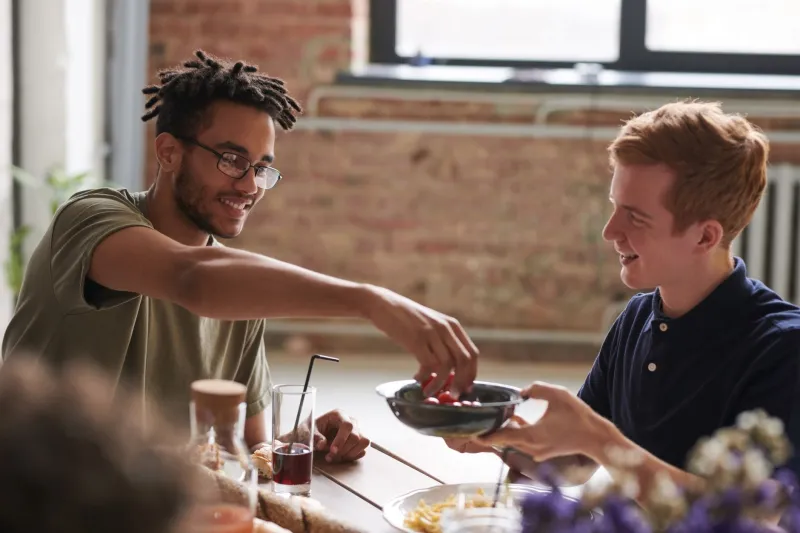
The mechanics vary widely. Some clubs operate through informal group texts and rotating coordination duties. Others use shared spreadsheets, open-source ordering platforms, or apps built specifically for cooperative purchasing. What they share is a foundational commitment: the savings belong to the members, not to a corporate intermediary.
Unlike national warehouse retailers, most neighborhood buying clubs carry no annual fee. Participation is the currency. Members take turns organizing orders, coordinating pickups, and managing supplier relationships. The labor is distributed, which means the benefits are too.
The Wholesale Gap and Who It Has Always Excluded
The gap between retail and wholesale grocery pricing in the United States is not incidental — it is structural. Retail markup on staple goods frequently ranges from 30 to 100 percent above distributor cost. Families who cannot afford bulk warehouse memberships, who lack reliable transportation to distant big-box stores, or who live in areas underserved by major grocery chains absorb that markup on every single purchase.
Food insecurity in America is often framed as a supply problem — not enough food reaching certain communities. But a significant dimension of the crisis is a pricing problem. Nutritious staples such as dried legumes, whole grains, cold-pressed oils, and frozen vegetables are available in abundance. They simply cost more per unit when purchased in small quantities at corner stores or neighborhood markets that themselves pay elevated wholesale prices due to low order volumes.
Buying clubs interrupt this cycle by restoring collective purchasing power to the households that need it most.
From Church Basements to Community Hubs
Some of the most durable buying clubs in the United States have roots in faith communities, tenant associations, and neighborhood mutual aid networks — organizations already built on trust and reciprocal obligation. In cities like Detroit, Baltimore, and Albuquerque, community groups have formalized informal food-sharing traditions into structured purchasing cooperatives that place monthly orders directly with regional distributors or agricultural cooperatives.
In rural areas, the model often connects more directly to agricultural producers. Families in farming communities have long organized buying clubs that purchase directly from neighboring farms, splitting full shares of meat, produce, or dairy that no individual household could consume before spoilage. These arrangements benefit producers as well, providing reliable demand and eliminating the retailer margin that often squeezes farm revenue.
Urban iterations of the model have grown more sophisticated in recent years. Some clubs have established partnerships with regional food hubs — intermediary organizations that aggregate supply from small and mid-sized farms and distribute it to institutional and community buyers. By positioning a buying club as a single institutional purchaser, coordinators can negotiate pricing tiers previously unavailable to individual consumers.
Coordination as Community Infrastructure
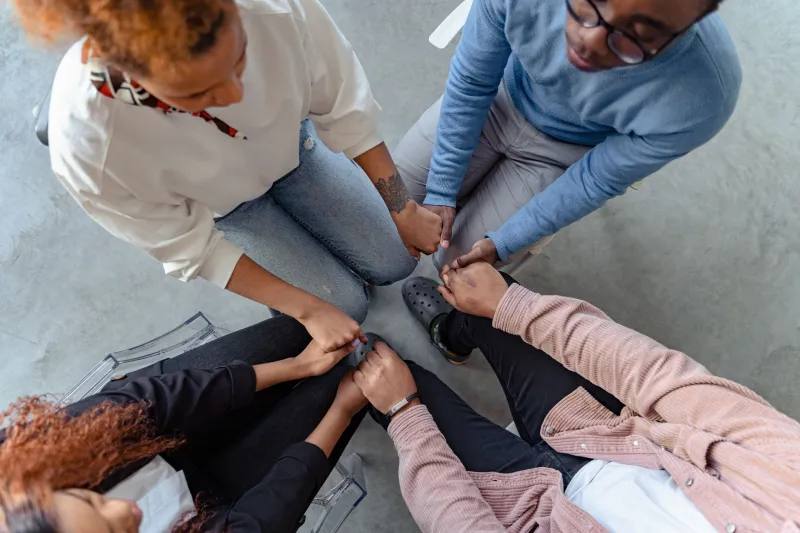
Perhaps the most underappreciated dimension of the buying club model is what happens between the orders. The logistics of collective purchasing — communicating preferences, resolving disputes over product selection, managing the occasional surplus of a product nobody wanted — require sustained interpersonal engagement. Participants learn one another's households, dietary needs, and financial constraints. They develop the habits of negotiation and compromise that consumer culture has largely made unnecessary.
This is not a trivial byproduct. Social isolation in the United States has reached levels that public health researchers now describe as a crisis with measurable consequences for physical health and civic participation. The buying club, in its modest and practical way, creates a recurring reason for neighbors to coordinate, depend on one another, and build the relational capital that more formal community institutions require to function.
Several buying clubs that began purely as cost-saving mechanisms have evolved into broader mutual aid networks — sharing not only grocery orders but tools, childcare, transportation, and emergency financial support. The trust generated through small, consistent acts of collective organization tends to expand.
Barriers and the Work of Lowering Them
The buying club model is not without friction. Coordination takes time, and time is not equally available to all working families. Single parents, people holding multiple jobs, and individuals managing chronic illness face genuine obstacles to sustained participation. Clubs that have addressed this most successfully tend to build in flexible contribution structures, ensuring that members who cannot take on coordination duties can contribute in other ways — through financial contributions to a shared coordination fund, for instance, or by handling communications tasks that can be managed asynchronously.
Language access is another persistent challenge. In communities where multiple languages are spoken, the informal communication infrastructure of many buying clubs can inadvertently exclude non-English-speaking households. Intentional multilingual outreach and translation support have expanded participation in several metropolitan clubs, with notable results for both membership diversity and community cohesion.
Digital access also shapes who can participate in clubs that rely on online ordering platforms. Some organizers have addressed this by maintaining parallel paper-based ordering systems or designating members who can assist neighbors with digital submissions.
A Different Grocery Math
The financial case for buying clubs is well-documented among participants. Households that join active clubs frequently report reductions of 25 to 40 percent on staple grocery costs — savings that, for a family spending $600 monthly on food, can represent more than $2,000 annually. For working families operating on thin margins, that figure is not abstract. It is a utility bill paid, a medical copay covered, a month's breathing room.
But the advocates most committed to this model tend to resist framing it purely in terms of individual savings. The cooperative tradition from which buying clubs descend holds that economic relationships are also social relationships — that how a community chooses to organize its purchasing reflects and reinforces its values. When neighbors pool resources to meet collective needs, they are practicing a form of economic democracy that the dominant retail system has no interest in encouraging.
The grocery math, in this light, is only the beginning of the calculation. What buying clubs are really accounting for is the cost of isolation, the price of dependency on systems indifferent to community wellbeing, and the value — difficult to quantify but unmistakable to participants — of belonging to something built by and for the people it serves.
The cart, it turns out, was always meant to be shared.