Pooling Our Wellbeing: The Rise of Community-Centered Health Networks Beyond the Insurance Industry
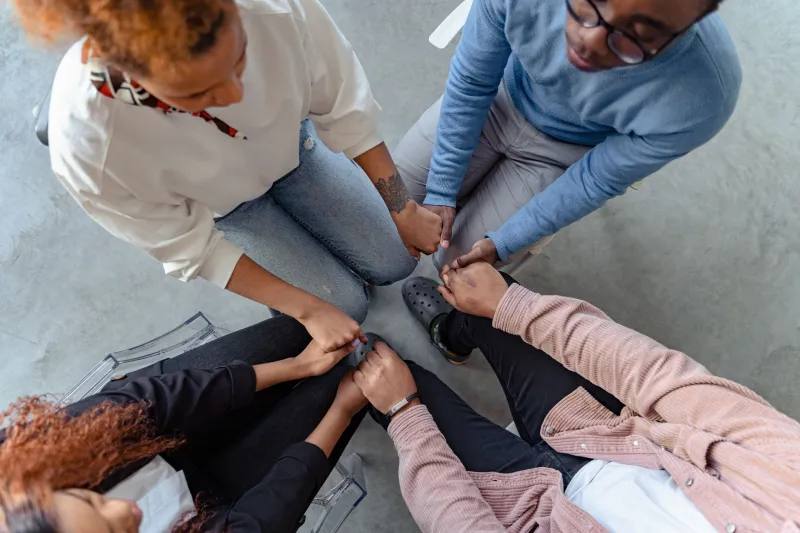
The American healthcare system is, by most measures, a study in fragmentation. Costs are catastrophic for millions of households, coverage is tethered to employment in ways that leave the self-employed and gig workers perpetually exposed, and the administrative machinery of private insurance consumes resources that could otherwise fund actual care. Against this backdrop, a quieter movement has been gathering momentum—one that looks less like a legislative overhaul and more like neighbors deciding, collectively, to take responsibility for one another's health.
This is not a fringe phenomenon. It is a structural reimagining of how medical risk, cost, and care can be organized when community, rather than corporate profit, sits at the center.
What Community Health Sharing Actually Looks Like
Health-sharing ministries are perhaps the most widely recognized expression of this movement. These are nonprofit organizations—many with religious foundations, though secular variants are expanding—through which members contribute monthly amounts to a shared pool that covers qualifying medical expenses for one another. Organizations such as Sedera, Liberty HealthShare, and Knew Health have enrolled hundreds of thousands of participants across the country.
The mechanics differ meaningfully from conventional insurance. There are no actuarial tables designed to maximize shareholder returns. Claims are not adjudicated by algorithms optimized to deny coverage. Instead, members review and approve one another's medical needs, creating a layer of human accountability that is almost entirely absent from the insurance industry's impersonal bureaucracy.
Beyond the ministry model, direct primary care (DPC) practices have emerged as another cooperative-adjacent innovation. In a DPC arrangement, patients pay a flat monthly membership fee—typically between $50 and $150—directly to a physician or small practice, bypassing insurance billing entirely. The physician, freed from the administrative burden of filing thousands of claims, can maintain a smaller patient panel, offer longer appointments, respond to messages the same day, and focus on the kind of longitudinal relationship that actually prevents illness rather than merely treating it.
Some communities have taken this logic further, combining DPC memberships with health-sharing pools to create a layered safety net: routine and preventive care handled affordably through direct membership, catastrophic expenses absorbed collectively through the sharing pool.
Prevention as a Collective Investment
One of the most consequential differences between cooperative health models and the dominant insurance paradigm is the emphasis placed on prevention. Traditional insurers have limited financial incentive to invest in keeping you well; their business model is premised on collecting premiums and limiting payouts, not on the longitudinal health of their enrollees—especially when people change plans frequently.
Community health networks, by contrast, have a direct stake in the ongoing wellbeing of their members. When a health-sharing pool absorbs the cost of a member's preventable hospitalization, every other member feels the impact. This creates genuine, distributed accountability for collective health outcomes.
Some networks have formalized this logic. Certain health-sharing ministries require members to demonstrate commitment to wellness practices—regular exercise, tobacco abstinence, routine screenings—as conditions of participation. While these requirements raise legitimate concerns about gatekeeping (discussed below), they also reflect a philosophy that health is a shared responsibility rather than an individual consumption choice.
Community wellness networks, particularly those emerging from cooperative and mutual aid traditions in cities like Portland, Denver, and Asheville, have gone further still—organizing group fitness programs, community gardens that supply fresh produce to members, mental health support circles, and peer health coaching. These are not amenities bolted onto an insurance product. They are the product itself: the deliberate cultivation of conditions under which people are less likely to become seriously ill in the first place.
The Hard Questions: Equity and the Limits of Solidarity
It would be dishonest to celebrate these models without confronting their tensions. Health-sharing ministries, in particular, carry a complicated record on inclusion. Many explicitly exclude pre-existing conditions from shared coverage, at least during an initial membership period. Some have historically restricted membership based on lifestyle criteria that function, in practice, as barriers for LGBTQ+ individuals, people with chronic illnesses, and those whose health histories reflect the accumulated disadvantages of poverty and structural racism.
The cooperative tradition, at its best, demands that we ask not only whether a model works for its current members, but whether it could work for everyone—and what obligations the movement carries toward those it has not yet reached.
There are encouraging signs that this reckoning is underway. Secular health-sharing organizations are explicitly designing their membership criteria to be more inclusive. Some cooperative health networks in urban areas are structuring sliding-scale membership fees and partnering with community health centers that serve uninsured and underinsured populations. The question of whether community health models can scale to serve those with complex, expensive medical needs—rather than primarily attracting healthy, younger members who represent lower financial risk—remains genuinely open.
This is precisely where the cooperative framework becomes indispensable. A health network that functions as a cooperative—with democratic governance, transparent finances, and membership that reflects the full diversity of a community—is structurally better positioned to resist the cream-skimming tendencies that afflict voluntary risk pools. When members have genuine voice in how the organization is governed and who it serves, the incentive to exclude the most vulnerable is counterbalanced by a democratic ethic of mutual obligation.
Toward a Resilient Health Commons
The conventional wisdom holds that healthcare reform must come from Washington—through expanded public programs, regulatory overhaul of the insurance industry, or some version of universal coverage. These remain vital policy objectives, and the cooperative health movement is not a substitute for them. But it is something important in its own right: a demonstration that communities can organize themselves to meet one another's needs with greater humanity, efficiency, and accountability than the market has managed to provide.
The cooperative immune system metaphor is instructive. A biological immune system does not function through isolated cells acting independently; it depends on communication, coordination, and the willingness of individual components to sacrifice for the health of the whole. Community health networks, at their best, operate on precisely this logic—distributing risk, reinforcing prevention, and holding one another accountable not through a contract, but through relationship.
For Americans exhausted by a system that treats their bodies as liabilities to be managed and their care as a profit center to be optimized, the emergence of these models represents something worth taking seriously. Not as a final answer, but as a living proof of concept: that when we organize around solidarity rather than extraction, our collective health can be more resilient than any individual policy could make us.
The work of building that solidarity—equitably, inclusively, and with clear eyes about the challenges ahead—is the work of a cooperative society. It is, in the most fundamental sense, the work of advancing humanity together.