Shelves Owned by the People Who Need Them Most: The New Wave of Equity-Building Grocery Cooperatives
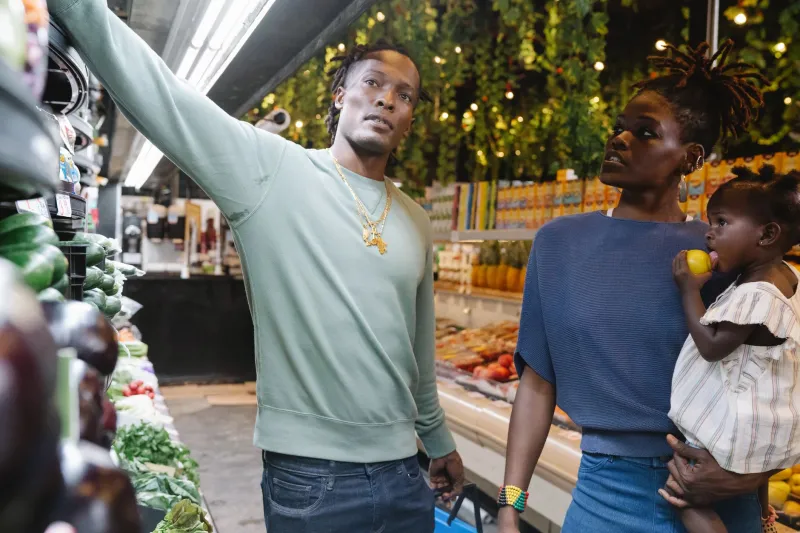
When the last full-service supermarket closes its doors in a neighborhood, it rarely announces its departure as an act of abandonment. The press release speaks of "operational restructuring" or "market realignment." What it means, in practice, is that thousands of residents — often predominantly Black, Latino, or working-class — must now travel miles for a gallon of milk or a bag of fresh spinach. What it means is that a community's food sovereignty has been quietly revoked.
For decades, the standard response to this problem has been charitable: food pantries, mobile markets, federal nutrition assistance. These interventions matter. But they do not build wealth. They do not give residents a stake in the institutions that feed them. A growing number of community organizers, cooperative developers, and local entrepreneurs are asking a harder question: What if the grocery store itself could become a vehicle for economic ownership?
The Consolidation Crisis Hiding in Plain Sight
The American grocery industry has undergone dramatic consolidation over the past three decades. Regional chains have been swallowed by national conglomerates. Profit-per-square-foot calculations have driven investment toward wealthier zip codes and away from communities where margins are thinner and logistical costs higher. The result is a geography of food access that maps almost perfectly onto existing lines of racial and economic inequality.
The USDA estimates that roughly 19 million Americans live in food deserts — areas where a substantial portion of the population lacks convenient access to affordable, nutritious food. The problem is not simply one of distance. It is one of power. When a community cannot sustain ownership over its own food infrastructure, it becomes permanently dependent on whether a distant corporation finds that community profitable enough to serve.
Cooperative grocery models offer a structural answer to a structural problem.
What Makes These Co-ops Different
The cooperative grocery stores emerging in underserved communities today differ meaningfully from the natural-foods cooperatives that became popular in college towns and progressive urban neighborhoods during the 1970s and 1980s. Those earlier institutions — however admirable — often served relatively affluent memberships and prioritized organic sourcing and artisanal products over affordability and community wealth-building.
The new model inverts those priorities. Membership shares are priced within reach of working-class families — sometimes as low as ten or twenty dollars, paid in installments if necessary. Governance structures are designed to ensure that low-income members hold genuine decision-making authority, not merely nominal representation. And critically, the financial architecture is constructed so that members accumulate equity over time, receiving patronage dividends tied to their purchasing activity.
In practical terms, this means that a family spending two hundred dollars a month at a cooperative grocery store is not merely a customer — they are building a small but real ownership stake in a community institution. Over years, those stakes compound. When the cooperative performs well, members share in that performance.
Case Studies in Community Ownership
In Richmond, Virginia, the Mandela Grocery Cooperative model — originally pioneered in Oakland, California — has inspired similar efforts to place store ownership directly in the hands of residents who have historically been excluded from economic participation. These initiatives begin not with a business plan drafted by outside consultants, but with community listening sessions where future members define what they actually need from a neighborhood store.
In rural Mississippi, cooperative grocery efforts have drawn on the long tradition of Black cooperative economics stretching back to the Federation of Southern Cooperatives, founded in 1967. Small towns that lost their only grocery store to chain consolidation have begun organizing member-investors from within the community, pooling modest individual contributions to capitalize a collectively owned store. The ownership is local. The profits stay local. The decisions are made locally.
In Chicago's South Side, organizers have paired cooperative grocery development with workforce training, ensuring that community members are not only owners but also skilled employees with pathways into management and governance roles. The store becomes, simultaneously, a food access point, an employer, a wealth-building vehicle, and a civic institution.
The Financial Mechanics of Shared Ownership
Skeptics sometimes question whether cooperative grocery stores can survive economically in low-income markets where margins are already thin. The evidence suggests that the question itself reflects a misunderstanding of how cooperative economics function.
Because member-owners have a direct stake in the store's success, they tend to shop there consistently — providing a reliable revenue base that conventional retailers cannot count on. Because governance is democratic and transparent, members often volunteer time and energy that reduces operating costs. Because profits are returned to members rather than extracted by distant shareholders, more capital remains available for reinvestment in the store itself.
Federal programs such as the USDA's Rural Energy for America Program, Community Development Block Grants, and New Markets Tax Credits have been successfully leveraged by cooperative grocery developers to reduce startup capital requirements. Community Development Financial Institutions — CDFIs — have emerged as important lending partners, offering patient capital to cooperative enterprises that conventional banks routinely decline to finance.
The financial model is not without challenges. Capitalization remains difficult. Member recruitment requires sustained organizing effort. Supply chain relationships that large chains take for granted must be built from scratch. But cooperative grocery stores that have successfully navigated these early-stage obstacles have demonstrated remarkable staying power, precisely because their members have a personal and financial reason to ensure they endure.
Ownership as a Form of Dignity
There is something important that the economic analysis alone does not fully capture. When residents of a neighborhood that has been systematically divested — by banks, by retailers, by public institutions — come together to own something together, the psychological and civic effects extend well beyond the balance sheet.
Membership in a cooperative grocery store is an assertion that this community is worth investing in. It is a declaration that the people who live here are capable of governing themselves and managing their own institutions. It is a refusal of the passive role that charity assigns to those it serves.
At Mankind Cooperative, we hold that collective ownership is not merely an economic strategy — it is a practice of human dignity. The grocery store, of all institutions, touches daily life most immediately. What we eat, how we access it, and who profits from that access are not trivial questions. They are questions of power.
Building the Infrastructure of a Different Economy
The cooperative grocery movement will not displace supermarket consolidation overnight. The capital requirements are real. The organizing work is slow and demanding. The regulatory environment, in many states, still favors conventional corporate structures over democratic ones.
But the trajectory is meaningful. Each cooperative grocery store that opens in a food desert represents a proof of concept: that communities written off by the market can write their own economic story. That ownership need not be the exclusive province of those who already have wealth. That the shelves in your neighborhood can belong to you.
For those who wish to support this work, the pathways are direct. Become a member of an existing cooperative grocery in your area. Advocate for municipal policies that prioritize cooperative development in food-insecure neighborhoods. Support CDFIs and cooperative development organizations with your deposits and your donations. And if your community lacks a cooperative grocery altogether, consider whether the conditions might exist to begin organizing one.
The harvest, after all, belongs to those who tend the field.