From Neighbor to Neighbor: How Mutual Aid Food Networks Are Restoring Dignity to American Tables
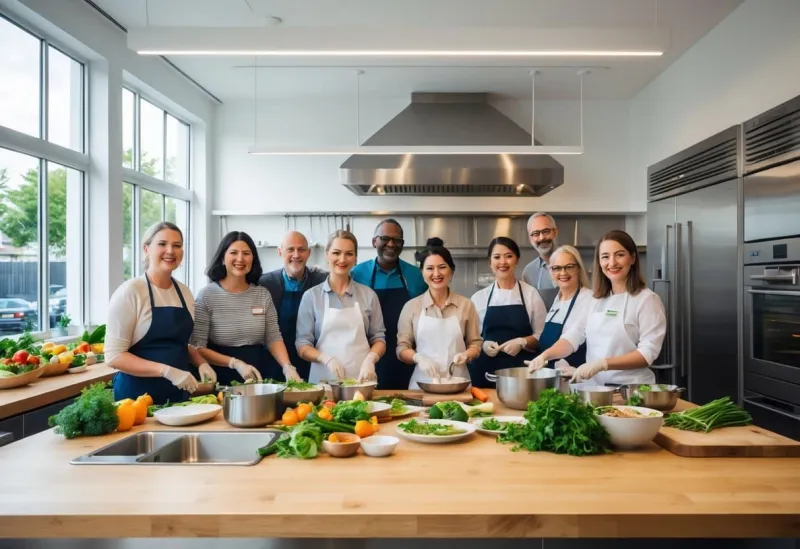
Photo: community kitchen neighbors cooking together sharing food urban, via amazingfoodanddrink.com
There is a particular kind of humiliation embedded in the traditional food bank experience. You arrive at a designated hour, present documentation, accept what is offered, and leave. The transaction is one-directional. You are, in the language of the institution, a recipient. For millions of Americans navigating food insecurity, this arrangement—however well-intentioned—reinforces the very powerlessness that poverty imposes.
Something different is emerging in neighborhoods from the South Side of Chicago to the Fruitvale district of Oakland, from the colonias along the Texas border to the post-industrial blocks of Cleveland's west side. Community members are building food networks grounded not in charity but in mutual aid—a principle as old as human cooperation itself, and as urgent as this morning's empty refrigerator.
What Mutual Aid Actually Means at the Kitchen Table
The distinction between charity and mutual aid is not merely semantic. Charity flows downward: from donor to recipient, from institution to individual, from those with surplus to those defined by lack. Mutual aid flows laterally. It operates on the assumption that everyone in a community has something to contribute and something to receive, and that the act of giving and receiving are not opposites but partners in the same ongoing relationship.
In practice, this looks like a community kitchen in the Bronx where residents with culinary skills prepare meals alongside neighbors who contribute garden harvests, while others offer childcare so that working parents can participate. No one is categorized as a beneficiary. Everyone is a member.
Organizers who have built these networks consistently emphasize that the model demands a fundamental reorientation of assumptions. "We don't ask people what they need," explained one coordinator of a mutual aid food collective in Minneapolis. "We ask people what they can share. And then we figure out together how to make the whole thing work. That shift in the first question changes everything about the relationship."
The Architecture of a Living Food Network
Mutual aid food networks vary considerably in structure, but several common elements distinguish them from conventional food assistance programs.
First, they are typically hyperlocal. Rather than operating from a centralized warehouse that serves a broad geographic area, these networks are organized at the neighborhood or even block level. This proximity matters enormously—it reduces transportation barriers, strengthens interpersonal relationships, and ensures that the food being shared reflects the actual culinary traditions and dietary needs of the community rather than the assumptions of outside administrators.
Second, they are governed collectively. Decisions about sourcing, distribution schedules, and membership are made through participatory processes, not handed down from a nonprofit board or government agency. This governance structure is not incidental to the mission; it is the mission. Building collective decision-making capacity is itself a form of community resilience.
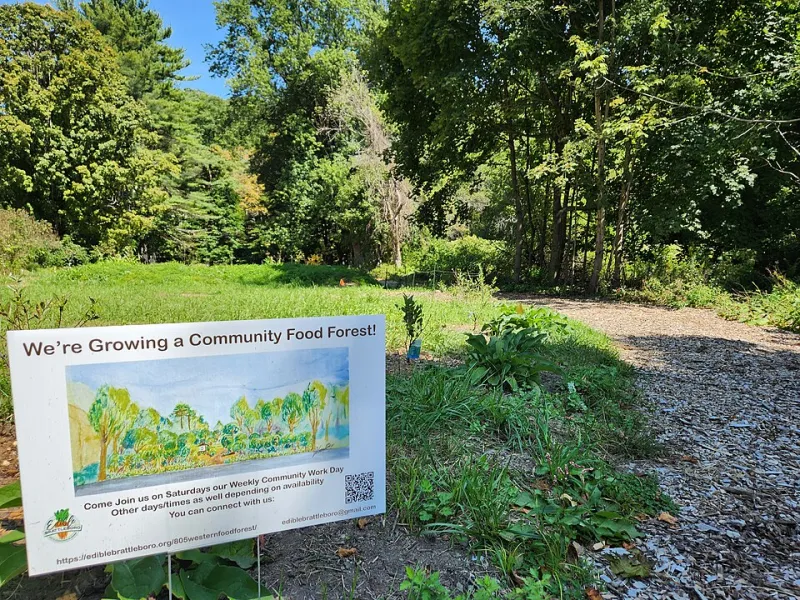
Third, they integrate food production wherever possible. Many mutual aid kitchen networks maintain community gardens, negotiate gleaning agreements with local farms, or partner with urban agriculture cooperatives to reduce dependence on donated processed foods. In Detroit, where decades of disinvestment left vast stretches of vacant land, several mutual aid networks have converted abandoned lots into productive growing spaces that feed directly into neighborhood meal programs.
Abundance Over Scarcity: A Different Organizing Principle
Conventional food assistance is organized around scarcity—around the assumption that there is never quite enough, that resources must be carefully rationed, and that access must be controlled to prevent abuse. Mutual aid networks tend to organize around a fundamentally different premise: that communities, when properly connected, contain abundant resources that the market simply fails to distribute equitably.
This reframing has practical consequences. A family that cannot afford groceries may nonetheless have time, skills, kitchen equipment, or social connections that are genuinely valuable to a food network. A retiree on a fixed income may grow more tomatoes than she can use. A restaurant worker may have food safety knowledge that transforms a community kitchen's capacity. When these contributions are recognized and activated, the network's collective resources far exceed what any single household—or any food bank—could mobilize alone.
Participants in these networks frequently describe a psychological shift that accompanies the structural one. "I came because I needed food," one participant in a Houston mutual aid kitchen recalled. "I stayed because I felt like I mattered to something. That's not something you feel standing in a line."
Navigating the Tensions
Mutual aid food networks are not without their challenges. Sustaining volunteer energy over time is genuinely difficult, particularly in communities where residents are already stretched thin by economic precarity. The same conditions that create food insecurity also create time insecurity, health insecurity, and housing insecurity—all of which compete for the bandwidth that collective organizing requires.
There are also tensions around formalization. As networks grow, they sometimes face pressure—from funders, from local government, from their own expanding operations—to adopt the structures of conventional nonprofits. Some organizers argue that a degree of institutionalization is necessary for longevity. Others contend that institutionalization inevitably imports the hierarchies and transactional logics that mutual aid is designed to escape. This debate is live and ongoing within the movement.
Relationships with existing food systems institutions also require careful navigation. Food banks and mutual aid networks are not natural adversaries, and in many cities they have developed productive partnerships. But the values animating each approach are genuinely different, and those differences occasionally produce friction.
What This Means for the Rest of Us
For Americans who do not currently experience food insecurity, mutual aid food networks offer something valuable as well: a model of community resilience that does not depend on the state or the market to function. In a period of accelerating climate disruption, economic volatility, and institutional erosion, the capacity to feed one another through direct cooperation is not a niche concern. It is a foundational social skill that most American communities have allowed to atrophy.
The networks described here are not romantic experiments. They are pragmatic responses to real failures—of the market, of policy, of the charity model itself. They are also proof of concept for a broader cooperative vision: that human communities, when organized around solidarity rather than competition, are capable of meeting their own needs with dignity.
The kitchen table has always been where community is made. Mutual aid networks are simply insisting that every neighbor deserves a seat at it.