Mankind Cooperative Advancing humanity through collective action

Mankind Cooperative

Advancing humanity through collective action

Latest Articles

The Other Bank: How CDFIs and Cooperative Credit Unions Are Quietly Financing a Different Economy
Workplace & Labor

The Other Bank: How CDFIs and Cooperative Credit Unions Are Quietly Financing a Different Economy

While venture capital dominates the headlines, a parallel financial system built on community ownership and shared risk has been steadily funding worker cooperatives, community land trusts, and social enterprises across the United States. Community Development Financial Institutions and cooperative credit unions are proving that capital does not have to flow upward — and that the infrastructure for a more equitable economy already exists. The question is whether enough Americans know it is there


Screens Down, Doors Open: The Rise of Intentionally Analog Community Spaces Across America
Sustainable Living

Screens Down, Doors Open: The Rise of Intentionally Analog Community Spaces Across America

Across the United States, a quiet but deliberate movement is emerging: community spaces that are choosing to operate without digital infrastructure as a matter of principle, not poverty. From tool libraries that track inventory on handwritten ledgers to neighborhood gathering halls that prohibit devices at the door, these analog-first spaces are revealing something profound about what technology has been quietly displacing. What participants are discovering inside these spaces may be the most im

Tending Together: How Indigenous Land Stewardship Is Offering America a Path Beyond Extraction
Workplace & Labor

Tending Together: How Indigenous Land Stewardship Is Offering America a Path Beyond Extraction

For generations, Indigenous communities across North America have managed forests, watersheds, and prairies through cooperative, reciprocal relationships with the land — systems that sustained ecological abundance long before the arrival of industrial capitalism. Today, a growing number of environmental organizations, federal agencies, and cooperative enterprises are entering formal partnerships with tribal nations to integrate traditional ecological knowledge into land management policy. What i

Reclaiming the Stack: How Worker-Owned and User-Owned Tech Platforms Are Challenging Silicon Valley's Grip
Workplace & Labor

Reclaiming the Stack: How Worker-Owned and User-Owned Tech Platforms Are Challenging Silicon Valley's Grip

A growing coalition of technologists, labor organizers, and everyday platform users is mounting a serious challenge to the venture-capital model that has dominated American tech for two decades. Worker-owned and user-owned digital cooperatives are no longer theoretical propositions—they are operational platforms rewriting the terms of who controls digital infrastructure and who benefits from it. The question is whether they can scale before the incumbent giants foreclose the possibility.

From Neighbor to Neighbor: How Mutual Aid Food Networks Are Restoring Dignity to American Tables
Sustainable Living

From Neighbor to Neighbor: How Mutual Aid Food Networks Are Restoring Dignity to American Tables

Across American cities, a quiet revolution in food sharing is replacing the transactional model of charity with something far more powerful: genuine community. Mutual aid food networks are not merely feeding people—they are rebuilding the social fabric that industrial food systems and economic inequality have steadily eroded. This is the story of what happens when neighbors stop waiting for institutions to solve hunger and start solving it together.

Planting Permanence: How Perennial Food Forests Are Replacing Charity With Community Abundance
Sustainable Living

Planting Permanence: How Perennial Food Forests Are Replacing Charity With Community Abundance

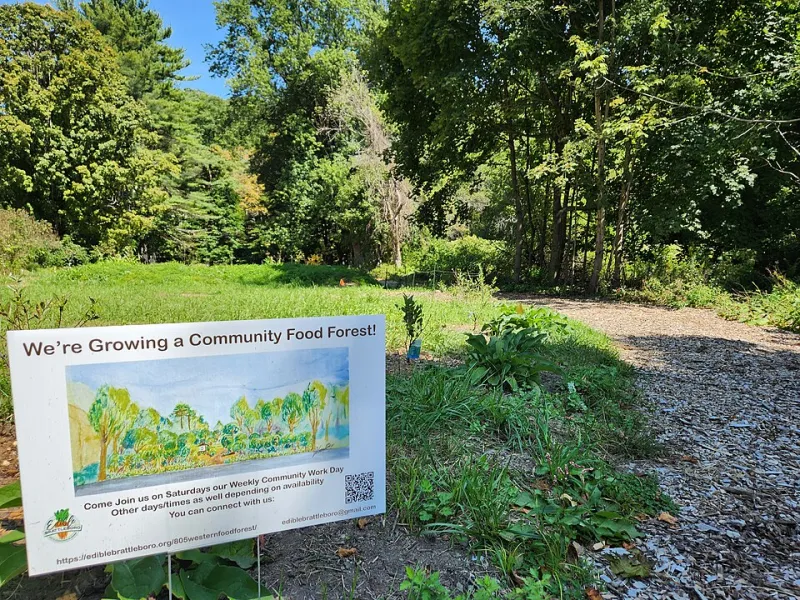
Across America, neighborhoods are transforming neglected vacant lots into layered, self-sustaining food forests that produce harvests year after year without dependence on donations or supply chains. This movement is not simply about growing food—it is about restructuring who controls access to it. Here is what communities are building, and how yours can join them.

The Knowledge Commons: How Peer-to-Peer Skill Sharing Is Quietly Rewriting the Rules of Self-Sufficiency
Workplace & Labor

The Knowledge Commons: How Peer-to-Peer Skill Sharing Is Quietly Rewriting the Rules of Self-Sufficiency

A quiet but consequential shift is underway in communities across the United States, as neighbors trade expertise, tools, and time outside the conventional marketplace. From time-banking systems to neighborhood tool libraries and structured knowledge exchanges, these peer-driven networks are reducing household costs, deepening social bonds, and demonstrating that human capability—not purchasing power—can be the true currency of a resilient community.

Wrenches, Neighbors, and a New Economy: How Repair Collectives Are Reshaping American Communities
Sustainable Living

Wrenches, Neighbors, and a New Economy: How Repair Collectives Are Reshaping American Communities

Across the United States, a quiet revolution is unfolding in church basements, community centers, and converted storefronts — one soldering iron at a time. Repair cafes, tool libraries, and community fix-it shops are not merely mending broken appliances; they are stitching together stronger, more resilient neighborhoods. This movement represents one of the most tangible expressions of cooperative values available to ordinary Americans today.

You Don't Need a Revolution to Build a Cooperative Workplace: Five Practical Steps Toward Shared Power
Workplace & Labor

You Don't Need a Revolution to Build a Cooperative Workplace: Five Practical Steps Toward Shared Power

The cooperative model is often discussed as an all-or-nothing proposition — a complete structural transformation that most employees and managers feel powerless to initiate. In reality, the principles underlying cooperative enterprise are surprisingly modular, and organizations of every size and type can begin incorporating them incrementally. This guide offers five concrete, field-tested strategies for introducing democratic governance, shared prosperity, and collective accountability into work